
Your process, your stages
Match the software to your floor
Set up your real stages without code, so the software fits how you already work.
What this costs while it stays invisible.
- Rigid ERPs force your work into boxes that operators refuse to use.
- Every trade has its own rules, like print farmas or hide yields. Generic software cannot cope.
- Consultants sell custom code that takes eighteen months and breaks on every update.
- Special jobs skip steps, but the system still wants entries for them.
- Outsourced work has no place, so teams keep paper registers for it.


What changes when the floor can be trusted.
- Set your stage order and a unit for each, like impressions, metres, kilograms or units.
- Link each stage to your machines or to outside vendors.
- Skip stages on reprints or partial runs without breaking anything.
- Commercial printing works out of the box. Upholstery and export garments run on the same core.
- Add new processes by setup, not risky custom code.
How it works
Step by step on the floor.
- 1Map your floor stages in their real order
- 2Assign machines, skill grades and vendors to each
- 3Link the workflow to your products and bill of materials
- 4Operators get a simple screen for each stage
Inside the Software
Real application screens. Not concept mockups.
Here is the actual interface your machine minders and plant leadership interact with every day, captured directly from running production setups.
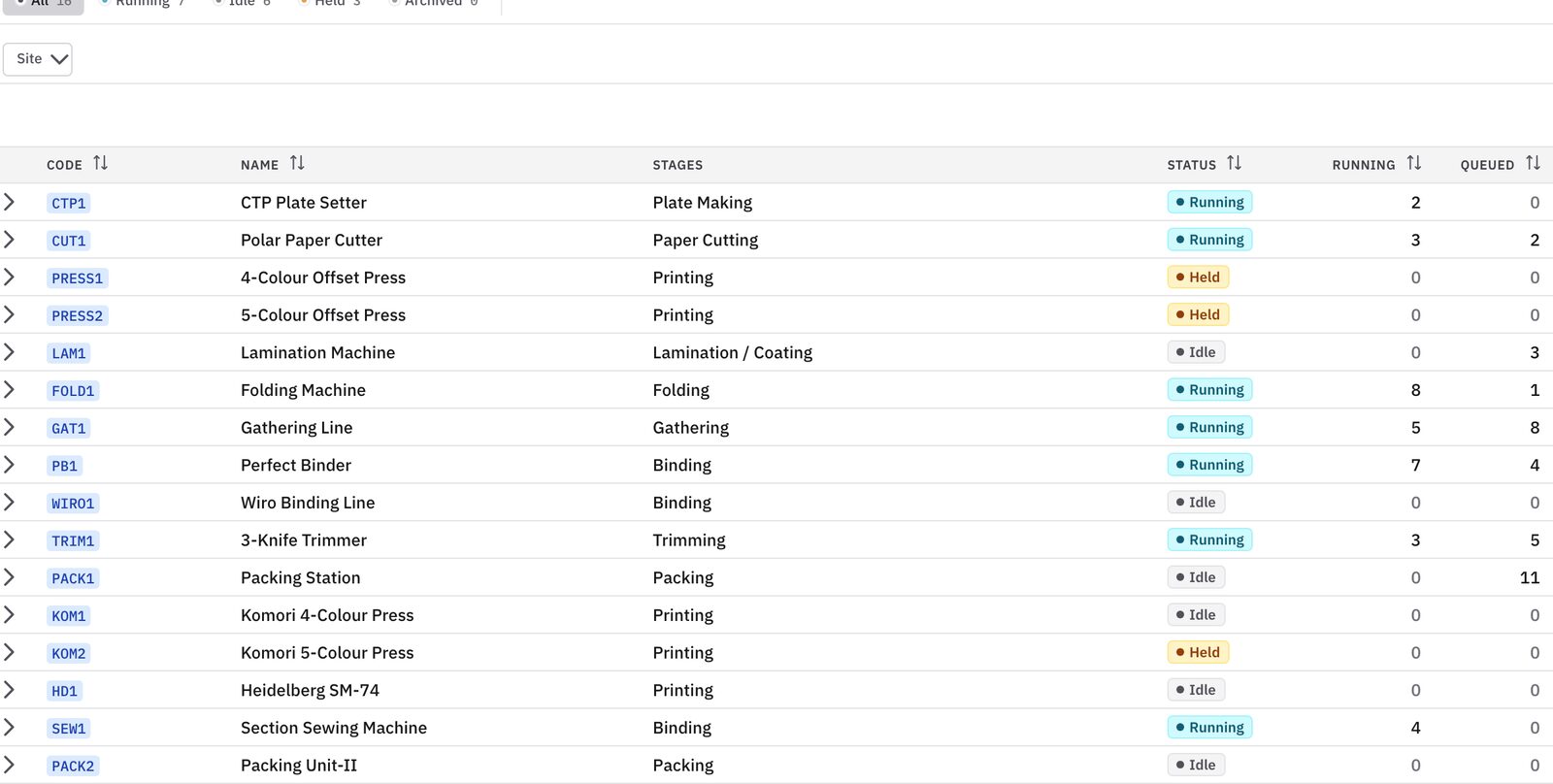
Set up your real stages and work centres, so the software matches your floor.
- Stages set to your actual process
- Each work centre tracked on its own
- No fixed template forced on you
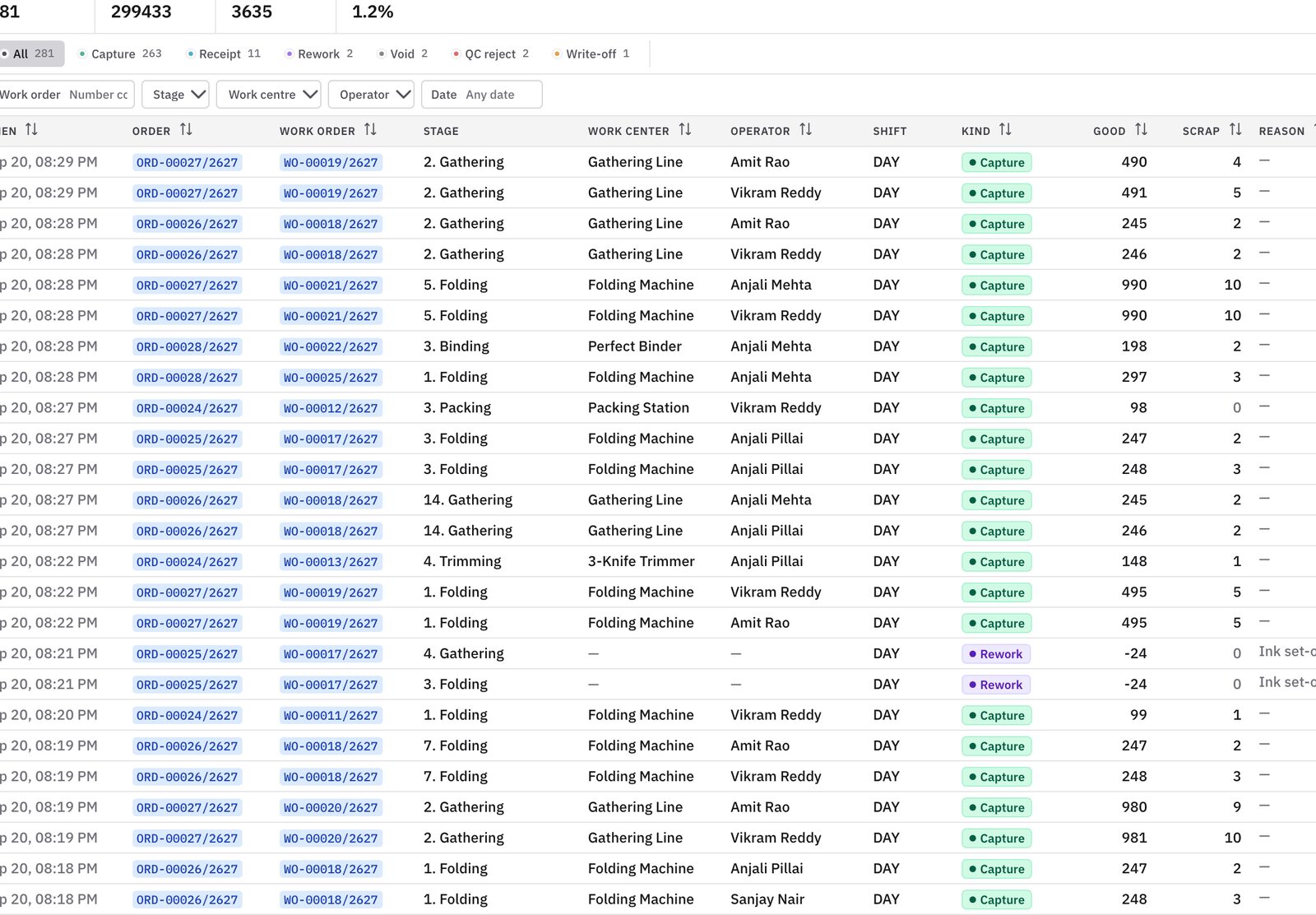
Each step shows its own output and status, whatever the route.
- Output logged at each stage
- Custom routes per product
- Bottlenecks visible step by step
Keep exploring
Works with
Questions you should ask before buying any system.
Can Prodman handle our trade's unusual workflow?
If you turn material into product through stages against due dates, yes. Trade rules like sheet maths or fabric grain sit apart from the core, so new trades do not touch proven code.
What if a job needs only three of the seven stages?
Supervisors can skip stages on one work order. A reprint that needs printing and binding skips laminating and die-cutting, so queues stay clean.
How are outsourced stages handled inside a workflow?
Outsourced steps are normal stages. Gate passes, vendor receipts and quality checks all sit in the job's timeline.
You should not need to spend your life walking the floor to discover the truth.
Bring us one problematic production order, one chronic bottleneck, or one metric nobody trusts. In thirty minutes, we will show you how Prodman restores order and calm, without asking your machine operators to become clerical typists.
Limited on-site implementations each quarter · Configured by hand