
Vertical 01 · Live in Production
Built on the floor of a working printer.
Prodman fits sheet size to print area with gutters, and works out exact UPs and farmas against the trade's golden tables. Generic software cannot do this print maths.
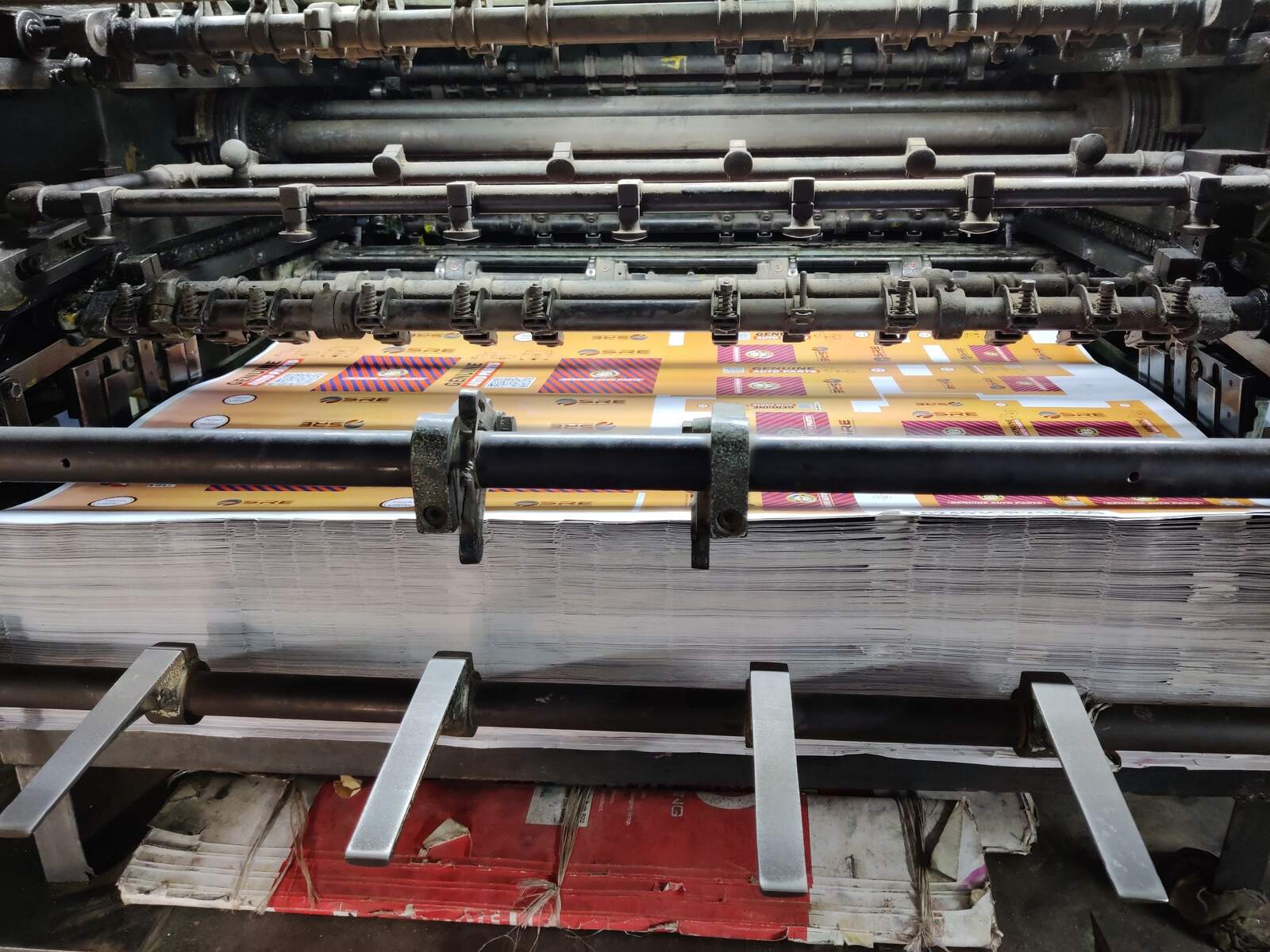
What the trade deals with
What printing floors fight with every day.
- Farmas and UPs are worked out by hand on scrap paper, and mistakes waste sheets.
- A/B, C/D, work-and-turn and work-and-tumble layouts go through folding with no tracking.
- Plates go missing, get made again, or go on the wrong press, and reprints are never billed.
- Paper comes in reels and goes out in reams, but nobody tracks the loss in between.
- Text and covers are made separately, so the casing-in line sits idle waiting for covers.
- Padded diaries come out thicker after foiling and casing, and the cartons split.
- Text and covers run on different lines, with nothing tying them to one delivery date.


How Prodman ERP fits
Set up for your trade.
- Print planning: works out sheet size, gutters, UPs and farmas, checked against golden tables.
- Imposition: sheet-work, work-and-turn and work-and-tumble are built in.
- Manual override: your planner can adjust grain and grip when a job needs it.
- Plate and die store: tracks each plate from making to mounting, wear, reprint charges and revenue per client.
- Plate checks: a plate can only go on a machine it fits.
- Paper register: tracks type, mill, GSM, finish, reels in metres and sheets in reams, and checks reel-to-sheet loss.
- Multi-part orders: text and covers are parts of one order, each with its own paper, machine and approval, until casing-in.
- Job cards: printed with imposition diagrams and machine route. No handwritten notes.
- Packaging: works out carton size with extra room for foam in leather and PU diaries.
- Planner reports: farma summary, print plan, plate stock, paper loss and machine clashes in one click.
This is where Prodman was born. We still build on a working floor, with real runs, real offset presses and real paper scrap every week.
Straight answers
Questions about printing.
Is Prodman a Print MIS or a shop-floor system?
Both. It handles job tickets and planning, but its strength is the floor: live machine counts, scrap per operator and work in progress at every stage. Quoting before the order is on our roadmap.
Does Prodman work out farmas and imposition correctly?
Yes. It uses sheet size, print area, grip and gutters to get exact farmas and UPs. It follows the golden tables your planners already trust, without the hand maths.
How does it stop us making the same plate twice?
Every plate and die is tracked. When an order comes in, Prodman checks the plate store by customer code and imposition key. If a plate exists, the planner is told to check and reuse it.
How are books and diaries with many parts handled?
Text and covers are separate work orders, each with its own paper, press and approval. Prodman makes sure both are ready together at casing-in and binding.
You should not need to spend your life walking the floor to discover the truth.
Bring us one problematic production order, one chronic bottleneck, or one metric nobody trusts. In thirty minutes, we will show you how Prodman restores order and calm, without asking your machine operators to become clerical typists.
Limited on-site implementations each quarter · Configured by hand