
Scrap and yield
Stop accepting wastage as normal
See scrap by stage and reason, and win back material you are losing today.
What this costs while it stays invisible.
- 8% to 15% of costly material ends up in the bin, and nobody answers for it.
- Ruined sheets get hidden behind the machine until packing finds the order short.
- When stock runs out mid-shift, operators cut down bigger stock and waste more.
- Scrap is worked out at month-end, so nobody knows which machine or shift caused it.
- You cut 5,000 units but box 4,720. Then come billing fights and late payments.


What changes when the floor can be trusted.
- Operators log good and scrap at the machine after every run.
- See scrap by job, stage, machine and shift.
- Workers tag the reason fast, like feeder misalignment or lamination bubbles.
- Planned extra is checked against real losses, so you do not ship short.
- A supervisor must approve before extra stock leaves the godown.
How it works
Step by step on the floor.
- 1The operator logs good pieces and scrap
- 2Prodman works out live scrap by stage, machine and job
- 3Supervisors act on high scrap the same day
- 4Fix the worst line first
Inside the Software
Real application screens. Not concept mockups.
Here is the actual interface your machine minders and plant leadership interact with every day, captured directly from running production setups.
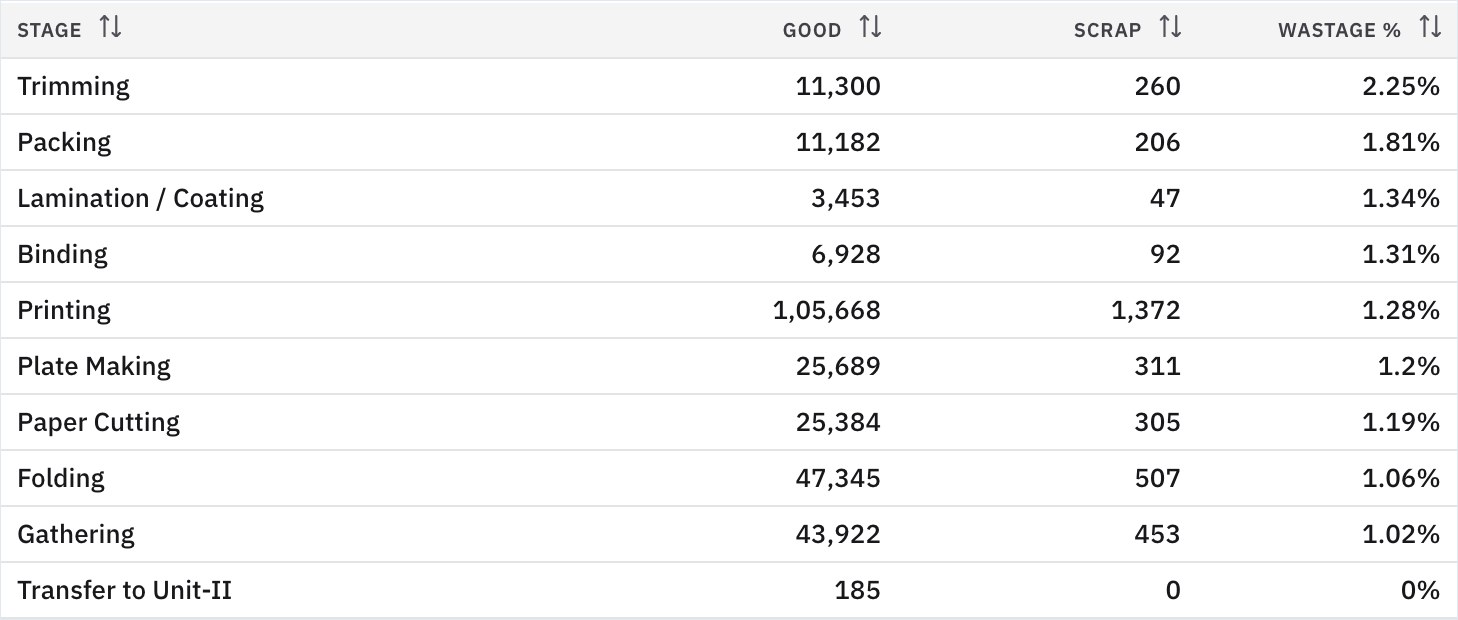
Scrap ranked worst first: Trimming (2.25%), Packing (1.81%), Printing (1.28%). Hard numbers, not guesses.
- Worst stages show at the top
- 1,05,668 good units against 1,372 scrap units
- Facts by stage, not finger-pointing
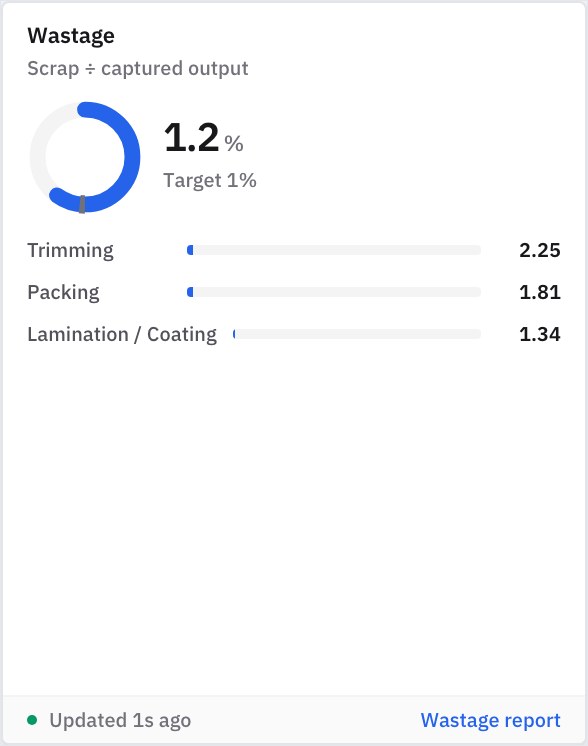
Company scrap (1.2%) against your target (1.0%), live, with the stages driving it.
- Simple gauge: 1.2% actual vs 1.0% target
- Top problem areas shown first
- Worked out as scrap ÷ total output

Operators log scrap with good counts. It takes two seconds, so they report it instead of hiding it.
- Good (500) and scrap (12) logged together
- Two-language keypad, no reading needed
- Linked to godown stock
Waste is not just the paper or fabric in the bin. You also lose the machine hours, the labour and the customer's trust. Prodman shows exactly where it leaks, so you fix the right thing first.
Calculate your savingsKeep exploring
Works with
Questions you should ask before buying any system.
How does Prodman work out scrap on multi-stage jobs?
At each stage: scrap divided by total processed (good plus scrap), from live floor entries. Setup scrap and finishing defects never get mixed up.
How does this stop operators underreporting scrap?
Prodman matches material in with output. Start with 1,000 sheets of 300 GSM board, pack only 850, and the 150 gap is flagged. Scrap cannot vanish.
Will tracking scrap upset the shop floor?
When the data is fair, talk moves from blame to fixing. Operators stop getting blamed when a worn feeder or die was the real cause.
You should not need to spend your life walking the floor to discover the truth.
Bring us one problematic production order, one chronic bottleneck, or one metric nobody trusts. In thirty minutes, we will show you how Prodman restores order and calm, without asking your machine operators to become clerical typists.
Limited on-site implementations each quarter · Configured by hand